Skip to content

Currently, medical-grade TPU suitable for both short- and long-term implants is only available at hardness levels of 70A and above. This leaves a significant gap for applications requiring exceptional softness needed for minimal invasiveness in delicate tissues and vessels.

With the launch of ChronoFlex™ S, medical device manufacturers have a new choice of materials that may eliminate the need for adhesives, pretreatments, and tie-layers. ChronoFlex S may be assessed for a wide range of applications, from neurovascular catheters to cardiology implants, orthopedic devices, wearable devices and drug delivery mechanisms. In addition, ChronoFlex S contains 36% USDA-certified biobased content, which aligns with sustainable manufacturing goals.

“ChronoFlex S is a TPU material that’s amenable to short and long-term implants and to implants requiring chemical resistance because of the excellent stability of the polymer backbone,” said Yu Tokura, Senior Chemist at Mitsubishi Chemical Group, develops advanced materials for medical devices. “Cardiovascular catheters, for example, demand minimal invasiveness and thin wall thickness. ChronoFlex S meets these criteria while also being one of the softest pure TPU on the market at 60A hardness.”

Here, we examine how ChronoFlex S compares to silicone and existing TPUs, and what makes it uniquely suited for challenging applications.

The gap in TPU solutions

TPU is a polymer resin commonly used in medical devices for its flexibility, processability, and durability. It’s an ideal choice to evaluate applications that require a balance of softness and strength such as catheter tubing and implantable cardiovascular devices.

“Prior to ChronoFlex™ S, the next-best solution for a soft material was silicone, which may require pre-treatment or adhesive to adhere to other materials,” said Mitsubishi Chemical Group Performance Polymer Account Manager Benjamin Fadda. “These additional manufacturing steps add time and cost to the overall production process. Like other TPUs, ChronoFlex S enables manufacturers to potentially bypass that step while also providing a level of softness that enhances patient comfort.” While other soft compounded materials also exist, what differentiates ChronoFlex S is that it allows the solvent-based processing (e.g. dip/cast) that provides an extremely thin-wall layer.

The limitations of silicone for implantable devices

Silicone is soft, compliant, and inert in the body. It exhibits long-term fatigue resistance and doesn’t require plasticizers for flexibility. However, silicone materials don’t have the strength of thermoplastics.

ChronoFlex S has a higher ultimate tensile strength compared to silicone, which may be advantageous for certain device applications. ChronoFlex S has excellent abrasion resistance, critical for devices subject to repetitive motion or friction. In addition, ChronoFlex S has lower gas permeability, which may be better suited for some applications.

“ChronoFlex S can be processed by a number of manufacturing methods, including being melted, extruded, or injection molded with standard processing equipment,” said Tokura.

Implantable devices require durability, stability, and softness, while manufacturers demand processability and adhesion. ChronoFlex S was developed to meet these needs at a hardness range of about 60A.

ChronoFlex™ S — the sweet spot

The ChronoFlex portfolio of products is known for its reliability and versatility for medical device applications. However, current products, including ChronoFlex C and ChronoFlex AL, have a hardness range of about 75A – 75D. To soften the product without compromising tensile strength or durability, our scientists used advanced polymer chemistry to develop a softer product without added plasticizers. The result: ChronoFlex S, a grade 60A TPU that delivers the softness and comfort previously only available with silicone while maintaining the superior strength, durability, and long-term stability of polyurethane – avoiding the conventional degradation risks of plasticized materials.

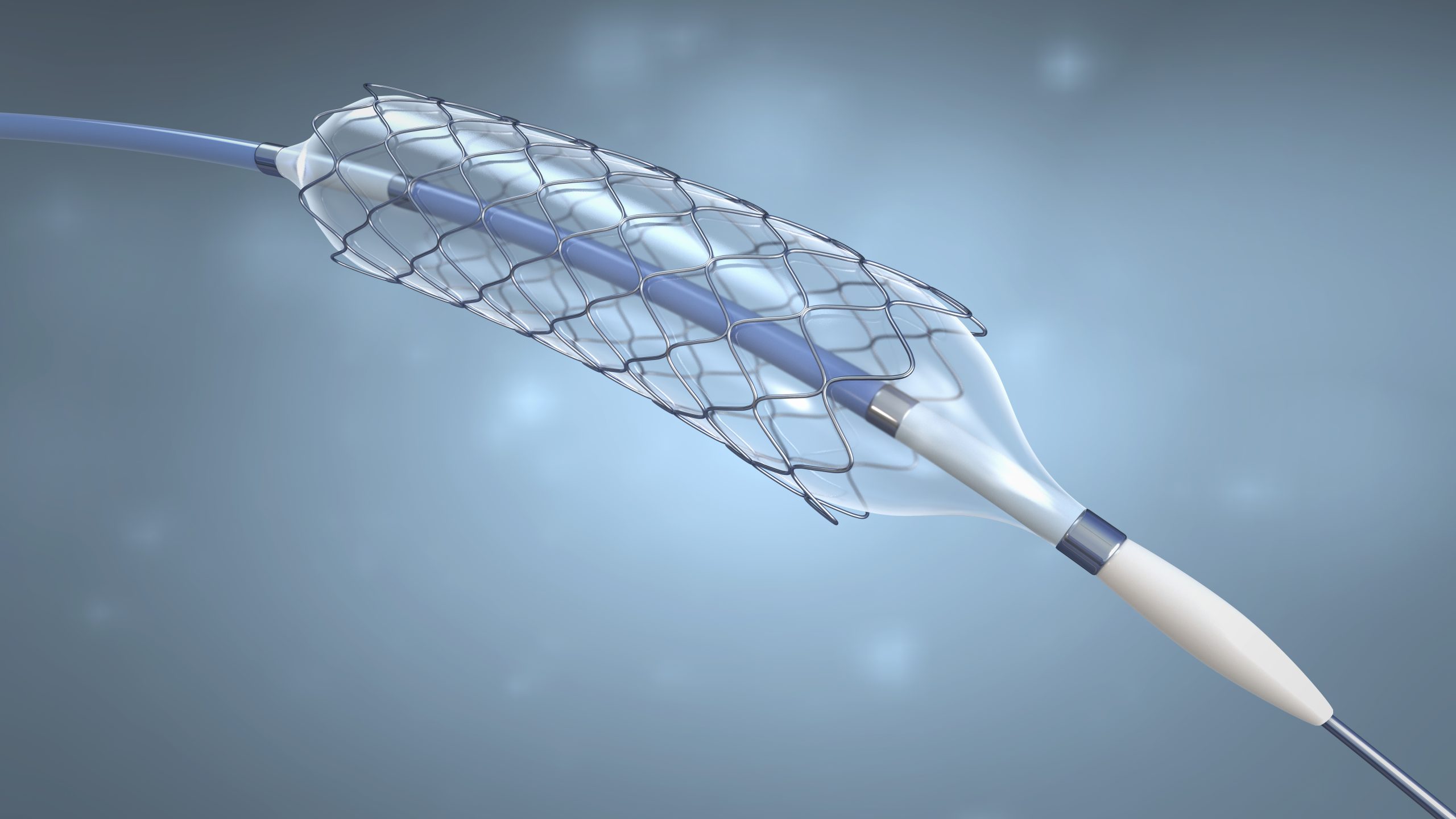
The balance of strength and softness may make ChronoFlex S suitable for more complex devices. “A neurovascular catheter needs to travel from the groin to the brain,” said Tokura. “The tip must be compliant to avoid damage to blood vessels, but the back end needs to be strong enough for the surgeon to push the catheter to the proper location. Combined, physicians have a device that can access sites in the body that wouldn’t be possible with a harder material.”

One of the most distinctive features of ChronoFlex S is its softening at in-body temperatures. Its unique polymer backbone responds to body temperature by becoming more conformable, potentially dropping from 60A to approximately 54A.

The formulation of ChronoFlex S does not utilize added plasticizers which may enhance long-term stability. Plasticizers can leach out over time, causing the material to harden and potentially fail. ChronoFlex may mitigate this risk by design. As a result, blooming/elution issues resulting from plasticizer-containing products are not expected with ChronoFlex S.

By integrating ChronoFlex S into medical products, medical device companies can potentially shorten development cycles and reduce processing complexity. ChronoFlex S is available in pellet, granule, or solution form and is compatible with extrusion, injection molding, compression molding, solution casting, dip molding/coating, and electrospinning—providing manufacturers with exceptional processing flexibility.

It can bond directly to other materials such as polyamide-type elastomers without adhesives or tie-layers, simplifying device construction. Aromatic TPU’s like ChronoFlex S are typically sterilized via ethylene oxide. Radiation-based sterilization methods may also be compatible depending on the specific device design and acceptable color change parameters, though validation is required for each application.

“The versatility of this TPU is excellent for applications requiring a soft material,” said Tokura. “You can process it by heat, dip-mold or cast film from solution. As a TPU without plasticizers, this product maintains processing method advantages while minimizing the potential for material degradation over time.”
Conclusion

The launch of ChronoFlex™ S addresses a longstanding materials gap in the medical device industry. With it, manufacturers can access a TPU with sub-70A softness that maintains excellent chemical resistance, oxidation stability, and mechanical strength – properties often required for medical device applications. Its combination of softness, strength and flexibility enables new device designs where those design inputs are essential.

“Until recently, silicone was often the go-to medical-grade material for sub-70A softness,” said Joe Rega, Senior R&D Manager at AdvanSource Biomaterials – Mitsubishi Chemical Group. “ChronoFlex S opens the door for applications that require softness, durability, and processability.”

“Medical devices requiring materials at softness at levels of 60A hardness, durability and a variety of processing methods have a new choice in materials with the launch of ChronoFlex S. — Yu Tokura, Senior Chemist, Mitsubishi Chemical Group

All statements, technical information, recommendations, and advice contained in this publication are presented in good faith, but are not warranted. They are in many cases based upon tests, such tests believed to be reliable, and practical field experience. Mitsubishi Chemical Group, Mitsubishi Chemical America, Inc. and AdvanSource Biomaterials do not guarantee the accuracy or completeness of this information and it is the customer’s responsibility to determine the suitability and regulatory compliance of Mitsubishi Chemical Group, Mitsubishi Chemical America, Inc. and AdvanSource Biomaterials products in any given application.